
Curtains do more work than most people give them credit for — they control light, add privacy, and shape how warm or cold a room feels visually. This curtain buying guide focuses on the details that actually matter at purchase time, since “blackout” and “size” on a listing rarely tell the full story.
Not every curtain labelled “blackout” blocks light the same way — the percentage matters more than the word on the package. — Shridya Editorial
Table of Contents
Blackout Levels — What the Percentages Mean
A genuine curtain buying guide needs to explain this clearly, since it’s the most commonly misunderstood spec on any listing. 100% blackout fabric blocks essentially all external light, ideal for bedrooms or anyone sensitive to early morning sun. 75% blackout reduces light significantly but still allows some glow through, suited to living rooms where total darkness isn’t the goal.
Common Mistake: Assuming any curtain labelled “blackout” performs the same. A 75% blackout curtain in a bedroom facing direct morning sun may not be dark enough for genuinely restful sleep — check the specific percentage, not just the word.
Browse both blackout levels together:
Showing 1–4 of 12 results

100% Blackout Door Curtain (7 Feet, Beige, Set of 2)
₹1,249.00100% Blackout Thermal Insulated Door Curtain (7 Feet, Dark Teal Blue, Single Panel)
₹575.00100% Blackout Thermal Insulated Door Curtains (7 Feet, Ash Grey, Set of 2)
₹1,299.00100% Blackout Thermal Insulated Door Curtains (8 Feet, Beige, Set of 2)
₹1,379.00
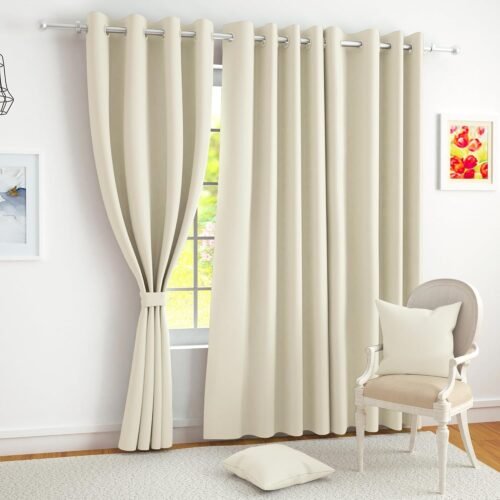
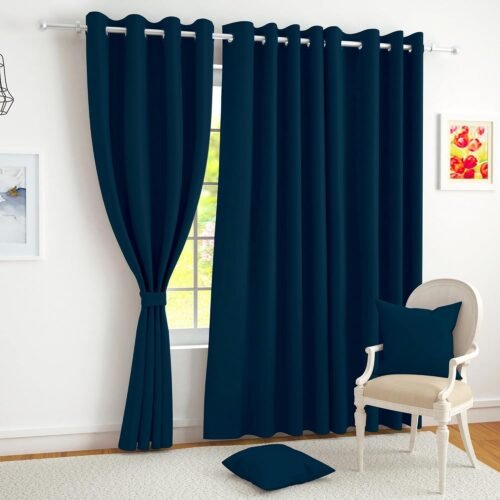
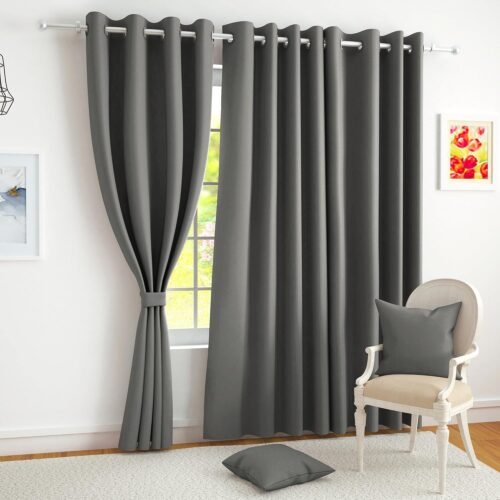
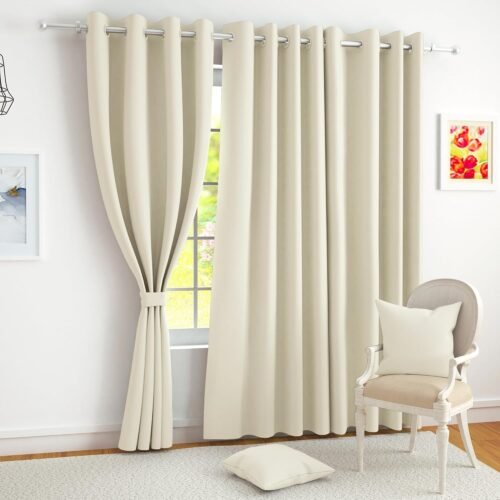
Door Curtains vs. Window Curtains
Door curtains are typically longer (commonly 7-8 feet) to fully cover a doorway, while window curtains come in shorter lengths (4.5-6 feet is common) suited to standard window heights. This distinction matters more in Indian homes than a curtain buying guide from a Western source might suggest, since door curtains here often double as a privacy and dust barrier for balcony or hallway entries, not purely a decorative window treatment.
According to general home textile guidance from established publications, curtain length should typically extend at least a few inches beyond the window or door frame on each side for the treatment to look intentional rather than undersized.
Fabric Choices and What They Affect
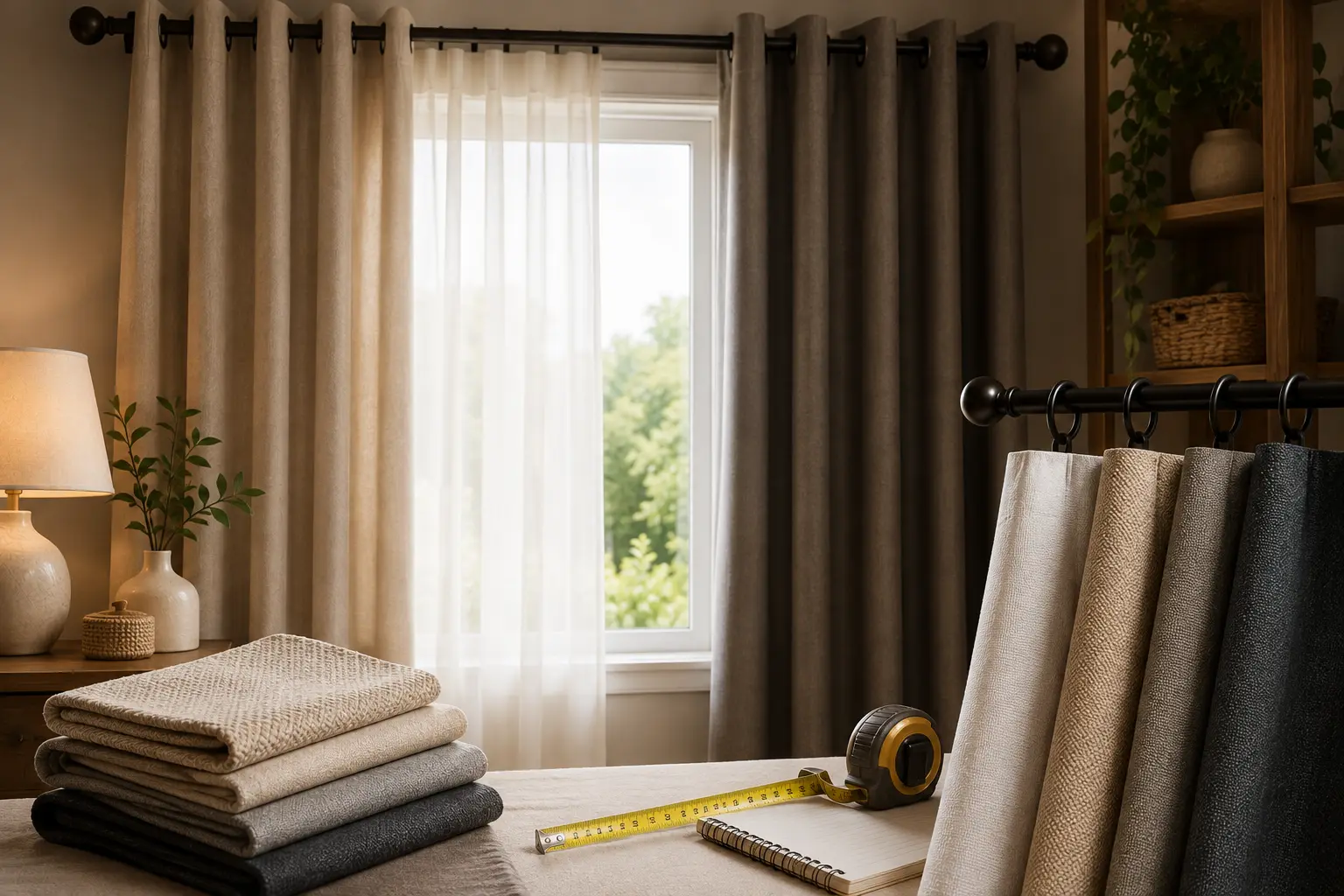
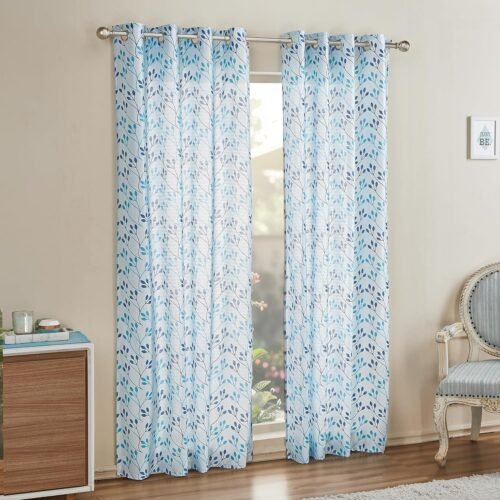
Polyester is the most common and affordable choice, durable and easy to maintain, though it doesn’t breathe as well as natural fibres. Cotton-linen blends, like a sheer option with steel eyelets, let more light and air through, working well as a secondary layer alongside a heavier blackout curtain rather than as a sole light-blocking solution. Silky or grommet-style curtains add a more polished, formal finish, generally suited to living or dining spaces over bedrooms.
Getting the Size Right
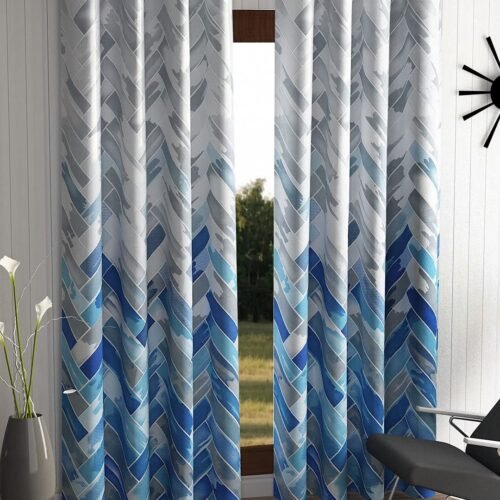
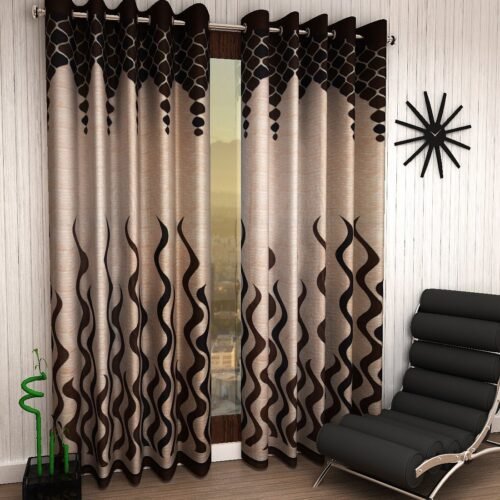
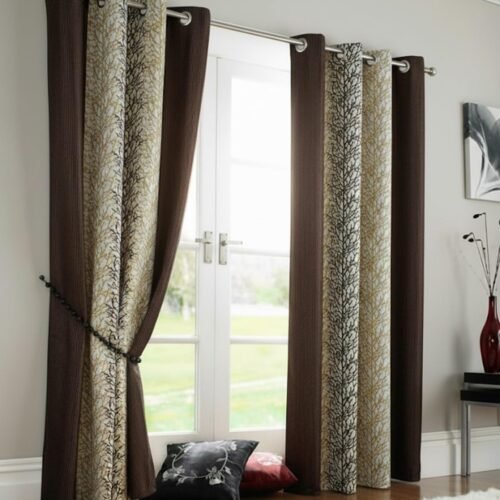
As this curtain buying guide always emphasizes, measure your actual window or door frame before ordering, not just the room’s general size. Width should typically be 1.5-2 times the frame’s width for a properly gathered, non-stretched look when closed, and length should clear the floor or sill as intended (some deliberately “puddle” slightly for a fuller look, most work best just grazing the floor).
Compare sizes and styles side by side:
Showing 1–4 of 12 results
Eyelet vs. Grommet vs. Rod Pocket
Eyelet and grommet styles (metal rings sewn into the top of the fabric) slide smoothly along a rod and hang in even, structured folds — the most common style in Indian retail today. Rod pocket curtains, where the rod threads directly through a fabric channel, are simpler but bunch less evenly and can be harder to slide open and closed daily. For a bedroom or any frequently-used curtain, eyelet or grommet styles are generally the more practical curtain buying guide recommendation.
A Note on Thermal Insulation
Thermal insulated curtains, often paired with blackout fabric, provide a genuine secondary benefit beyond light control — they help regulate room temperature by reducing heat transfer through the window or door, which can meaningfully reduce reliance on air conditioning or heating in extreme seasons. This is worth prioritizing specifically for west-facing rooms that get intense afternoon sun.
Quick Checklist
- Have you checked the actual blackout percentage, not just the word “blackout”?
- Is this a door or window curtain, and does the length match that use?
- Have you measured your actual frame width and length before ordering?
- Eyelet, grommet, or rod pocket — which suits how often you’ll open and close it?
- Would thermal insulation genuinely help this room’s sun exposure?
Key Takeaways
- A proper curtain buying guide checks the blackout percentage specifically, not just the label.
- Door and window curtains need different lengths — measure your actual frame.
- Eyelet and grommet styles are generally more practical for daily use than rod pocket.
- Thermal insulated options add real temperature benefits in high-sun rooms.
Every product mentioned here is personally checked by Shridya — for quality, real reviews, and honest value — before it earns a place on this site.
Conclusion
A curtain buying guide really comes down to matching the right blackout level, fabric, and size to the specific room, rather than picking based on colour alone. Check the actual percentage, measure your frame properly, and choose a style you’ll actually enjoy opening and closing daily. For more on layering textures and lighting in the rooms these curtains go into, see our Room-by-Room Home Decor Guide.
FAQs
What does “100% blackout” actually mean for curtains?
It means the fabric blocks essentially all external light, making it best for bedrooms or anyone needing a fully dark room to sleep.
How much wider should curtains be than the window?
Generally 1.5-2 times the frame’s width, so the fabric gathers properly rather than looking stretched flat when closed.
Are eyelet curtains better than rod pocket curtains?
For daily use, generally yes — eyelet and grommet styles slide more smoothly and hang in more even folds than rod pocket curtains.