
An empty corner is one of the easiest problems to fix in a living room, and a floor lamp is usually the simplest fix available. This floor lamp buying guide covers what actually matters when choosing one — height, style, and placement — since a lamp that’s the wrong size for its corner ends up looking like an afterthought rather than an intentional piece.
A floor lamp’s job is to fill a gap that furniture can’t — the right one makes an empty corner feel finished instead of forgotten. — Shridya Editorial
Table of Contents
Height — Getting the Scale Right
Every floor lamp buying guide should start with height, since it’s the detail most likely to make a lamp look wrong for its space. As a general rule, a floor lamp used beside seating should stand roughly 58-64 inches tall — tall enough that the light source sits above eye level when seated, avoiding glare, but not so tall it dominates the corner. A shorter lamp, closer to 40-50 inches, works better as a standalone accent piece away from seating.
Showing 1–4 of 7 results
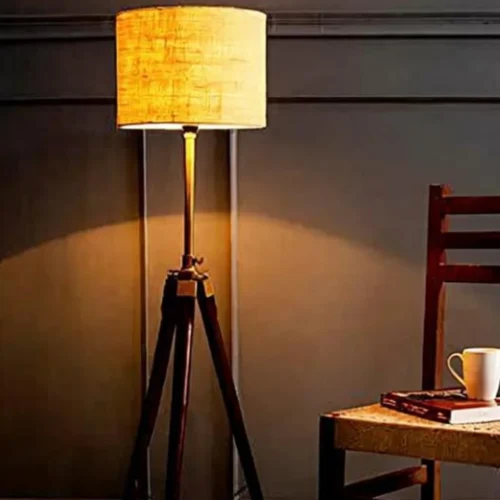
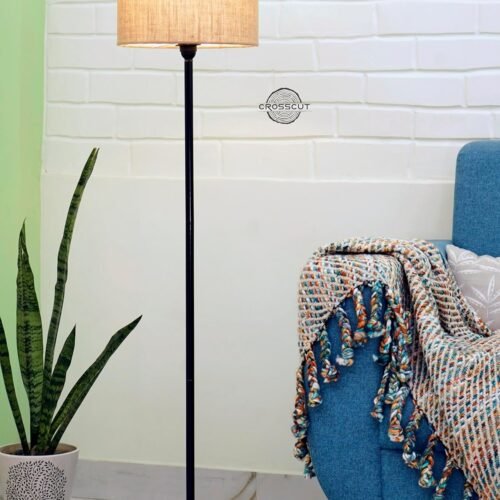
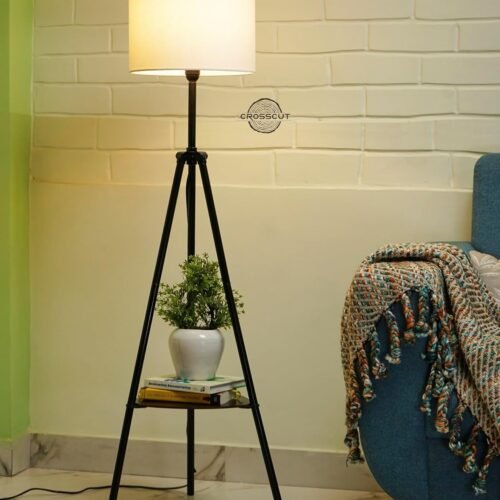
Tripod vs. Tower vs. Arc Styles
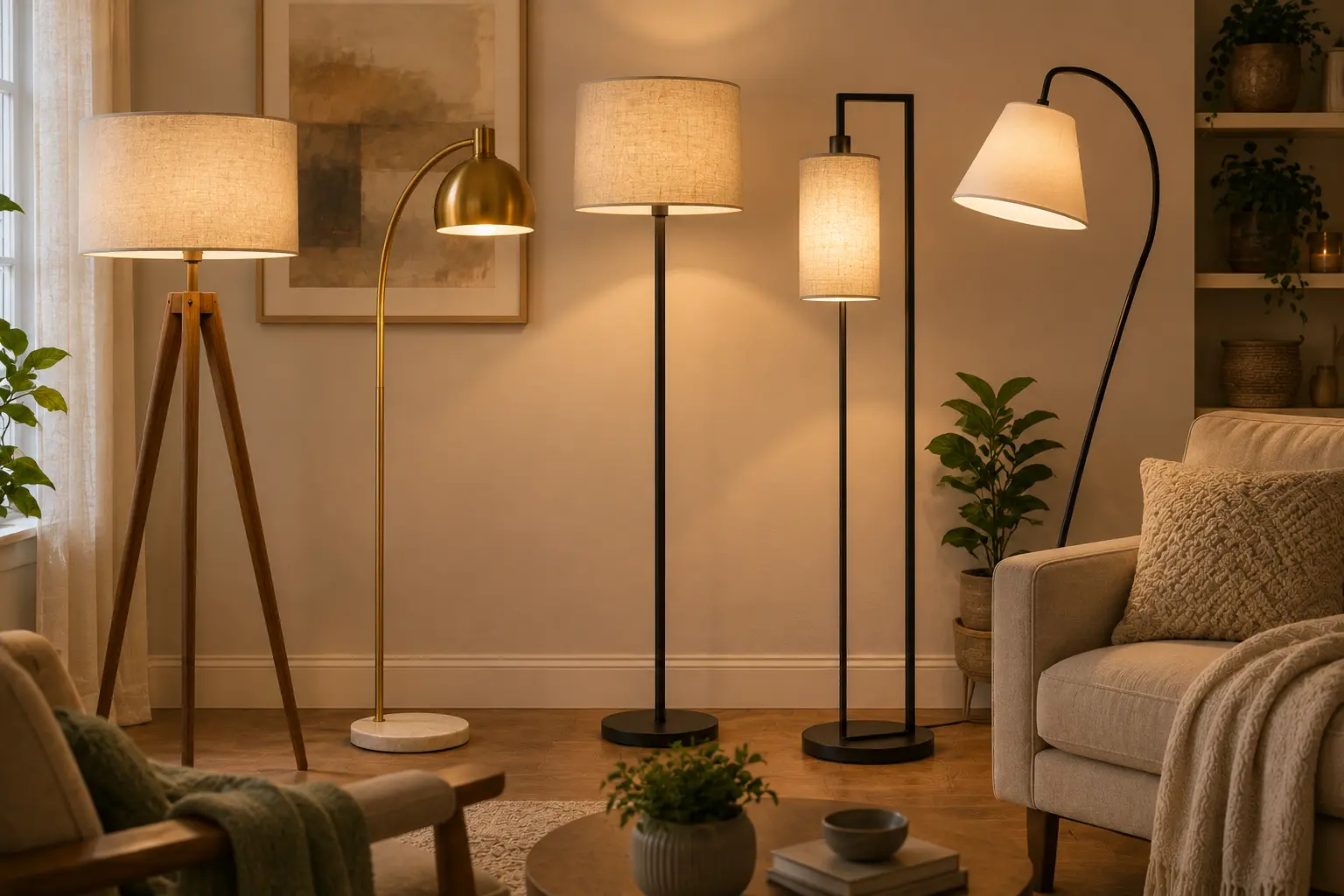
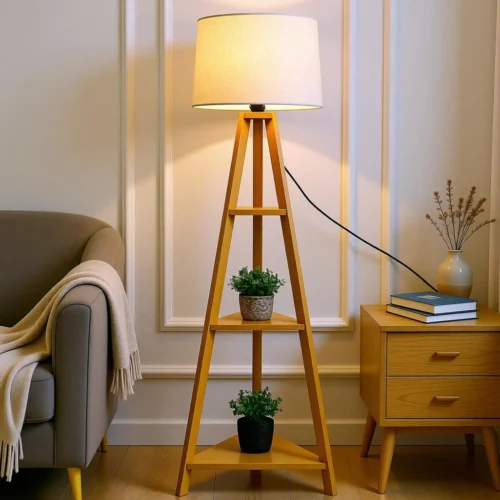
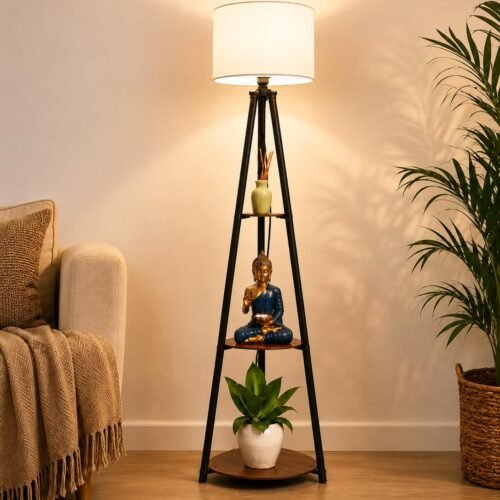
Tripod floor lamps (three-legged bases, often in wood) bring warmth and a mid-century feel, pairing naturally with Shridya’s earthy palette — genuinely one of the more versatile styles for Indian living rooms. Tower lamps (single slim pole, often with a drum shade) take up minimal floor space, well suited to smaller rooms. Arc lamps curve over seating from a weighted base, useful for reading light directly over a sofa without needing a side table at all.
Common Mistake: Choosing a tripod lamp for a very tight corner without checking the actual footprint of the three legs — a tripod base needs meaningfully more floor clearance than its slim pole suggests from photos alone. This floor lamp buying guide recommends measuring the base spread, not just the lamp’s height, before committing.
Where to Actually Place a Floor Lamp
The most natural placement is beside a reading chair or one end of a sofa, filling the gap a side table alone can’t. A second common spot: an empty corner that otherwise has no visual anchor, where the lamp itself becomes the styling focal point. According to general design guidance from established home publications, layered lighting — combining ambient, task, and accent sources rather than relying on one overhead light — is consistently recommended for a room that actually feels comfortable to spend time in, which is exactly the role a floor lamp plays.
Showing 1–4 of 7 results
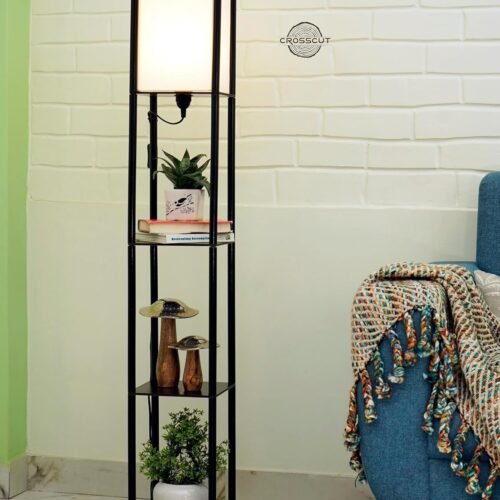
Shade Material and Light Quality
Fabric shades (linen, cotton) diffuse light softly and suit a warm, ambient role well — this floor lamp buying guide generally recommends them over harder materials for a genuinely relaxed living room mood. Metal or glass shades direct light more precisely, useful if the lamp is doing double duty as reading light rather than pure ambiance.
Base Material and Stability
Wood and metal bases are the most common and generally the most stable, particularly important if the lamp sits somewhere it could be bumped regularly. A jute-wrapped or woven base adds texture consistent with Shridya’s aesthetic, though it’s worth checking the actual base weight and footprint for stability in households with kids or pets, a detail any careful floor lamp buying guide should flag rather than assume.
Pairing With Existing Lighting
A floor lamp shouldn’t be your only secondary light source — pairing it with at least one table lamp, as covered in our Bedside Table Lamp Guide, creates the layered lighting effect that makes a room feel genuinely finished rather than lit by a single overhead fixture alone.
Quick Checklist
- Is the height right for its intended spot — beside seating or standalone?
- Have you measured the base footprint, not just the overall height?
- Does the shade material suit ambient use or task lighting?
- Is the base stable enough for your household’s actual foot traffic?
- Does it pair with at least one other light source in the room?
Key Takeaways
- A good floor lamp buying guide starts with height and base footprint, not just style.
- Tripod, tower, and arc styles each suit different corner shapes and uses.
- Fabric shades suit ambient mood lighting; metal or glass suit task lighting.
- Pair a floor lamp with other light sources for a genuinely layered result.
Every product mentioned here is personally checked by Shridya — for quality, real reviews, and honest value — before it earns a place on this site.
Conclusion
A floor lamp buying guide really comes down to matching height and footprint to the actual corner you’re filling, then choosing a style and shade that suit how you’ll use the light. Get those right, and an empty corner becomes one of the more inviting spots in the room. For more on layering lighting throughout a space, see our Bedside Table Lamp Guide.
FAQs
How tall should a floor lamp be?
Roughly 58-64 inches for use beside seating, so the light source sits above eye level; shorter lamps around 40-50 inches suit standalone accent use.
Is a tripod or tower floor lamp better for a small room?
A tower lamp generally takes up less floor space, while a tripod needs more clearance for its three-legged base despite looking slim in photos.
Where should a floor lamp be placed in a living room?
Beside a reading chair or one end of a sofa, or in an empty corner that otherwise lacks a visual anchor.