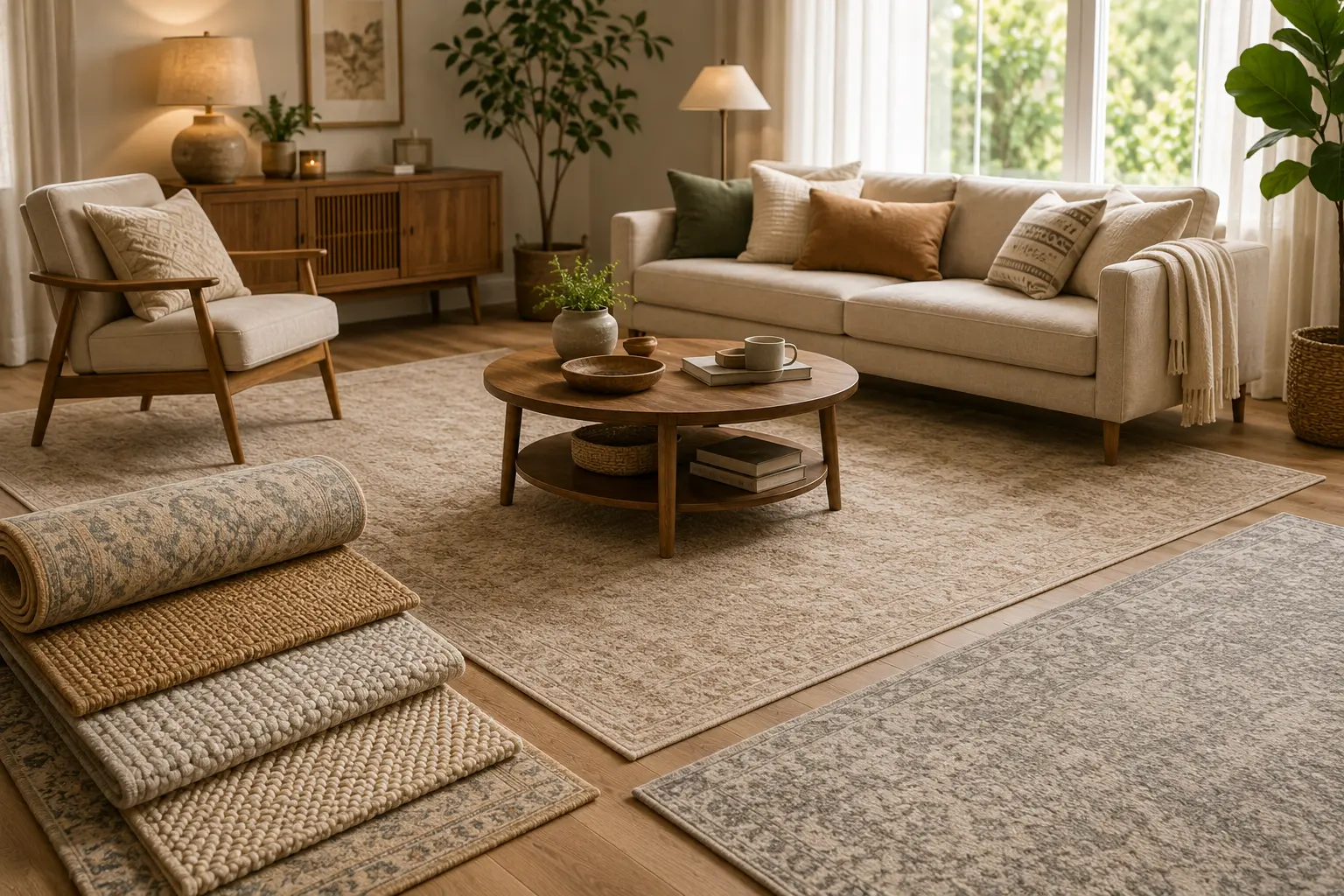

A rug that’s too small is one of the most common styling mistakes in Indian living rooms — furniture ends up looking like it’s floating on an island rather than grounded in the space. This area rug buying guide focuses on the decision that matters most: sizing, followed by material and placement, since a rug’s shape and color matter far less if the size is wrong.
A rug should feel like it’s holding the furniture together, not sitting underneath it as an afterthought. Size gets that right more than any pattern choice. — Shridya Editorial
Table of Contents
Sizing — The Decision That Matters Most
Every area rug buying guide should lead with this: as a general rule, at minimum, the front legs of your sofa and chairs should sit on the rug, not entirely off it. For a more grounded look, all furniture legs sitting on the rug works best in larger living rooms. A rug that only sits under a coffee table, with all seating placed around its edges, is the single most common sizing mistake in smaller Indian living rooms specifically.
Showing 1–4 of 11 results

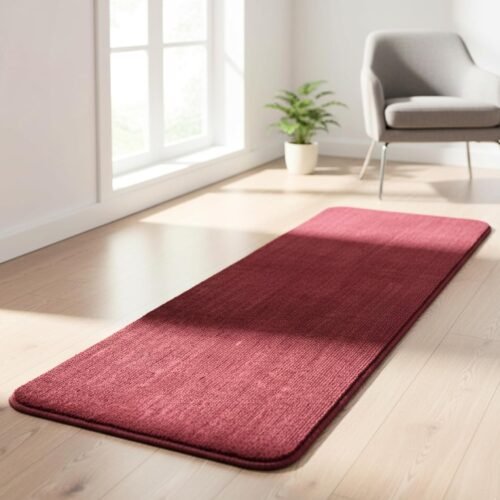
Microfiber Runner Mat 43×120 cm | Anti-Skid Washable Floor Runner | Maroon
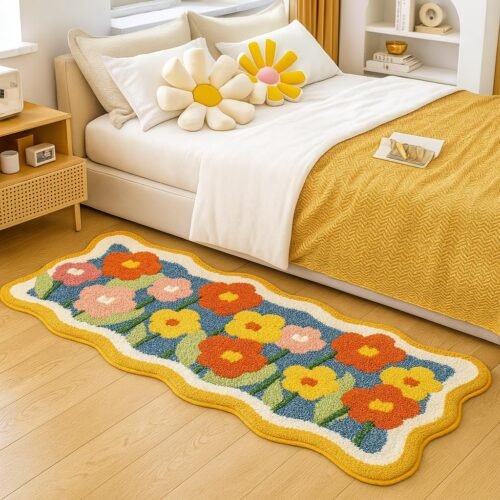
₹499.00Lily Microfiber Runner Rug 50×120 cm | Anti-Skid Washable High Pile Floor Mat | Lily Design
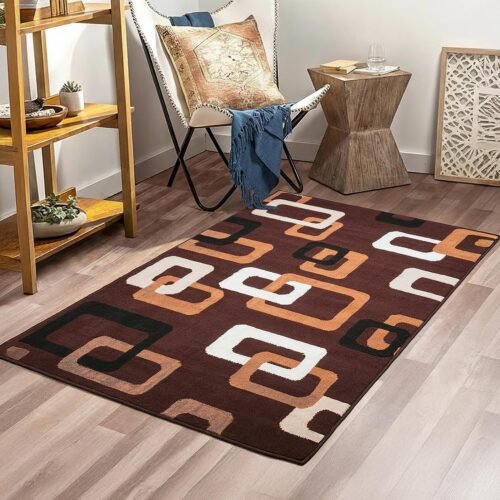
₹796.00Machine-Made Carpet 3×5 ft | Anti-Skid Soft Indoor Area Rug | Grace Pattern
₹848.00Round Jute Rug 3 ft | Handmade Braided Natural Floor Rug | Yellow
₹849.00
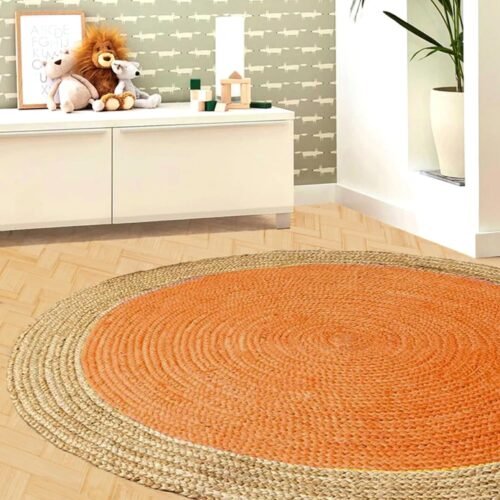
Jute vs. Shaggy vs. Cotton
Jute rugs bring natural texture and an earthy tone that suits Shridya’s warm palette particularly well, and they’re generally more durable underfoot for high-traffic living rooms. Shaggy rugs offer a softer, plusher feel, better suited to bedrooms or low-traffic corners than busy living areas, since the pile can flatten faster with heavy use. Cotton rugs sit in between — softer than jute, more durable and easier to clean than shaggy styles.
Common Mistake: Choosing a shaggy rug for a high-traffic living room purely because it looks cozy in photos. This area rug buying guide would recommend jute or a flatter cotton weave for genuinely heavy-use spaces instead.
According to general design guidance from established home publications, rug material should be chosen based on foot traffic and room function first, aesthetics second — a principle that holds regardless of which style you’re drawn to visually.
Placement Rules for a Living Room
Beyond furniture-leg positioning, leave roughly 10-15 inches of exposed flooring between the rug’s edge and the walls — a rug that stretches wall-to-wall reads as wall-to-wall carpeting rather than an intentional area rug. This area rug buying guide treats that visible flooring border as an important framing detail, not wasted space.
Showing 1–4 of 11 results
California Premium Shaggy Area Rug 2×4 Feet | Handmade Micro Silk Fiber Plush Carpet | Beige
₹1,490.00Fluffy Shaggy Area Rug 4×2 Feet | Soft Microfiber Bedside Runner Carpet | Grey
₹1,099.00Geometric Area Rug 4×6 ft | Anti-Skid Indoor Carpet | Crystals Design
₹1,799.00Handmade Printed Area Rug 3×5 Feet | Sustainable Flat Woven Indoor Rug | Floral Off White
₹1,049.00
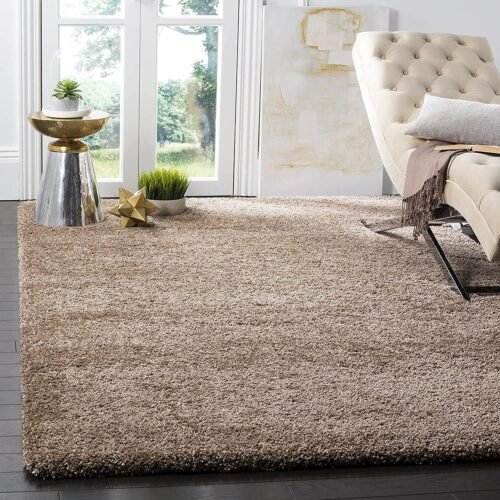
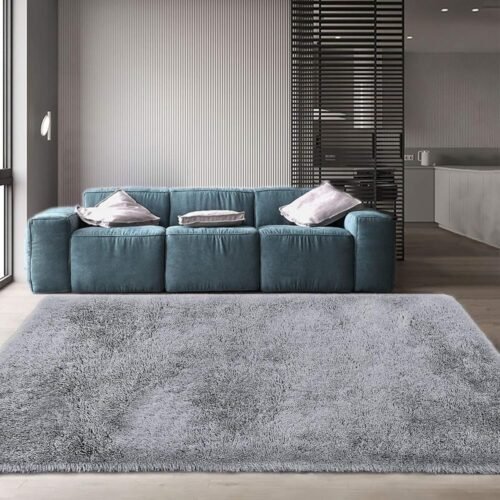
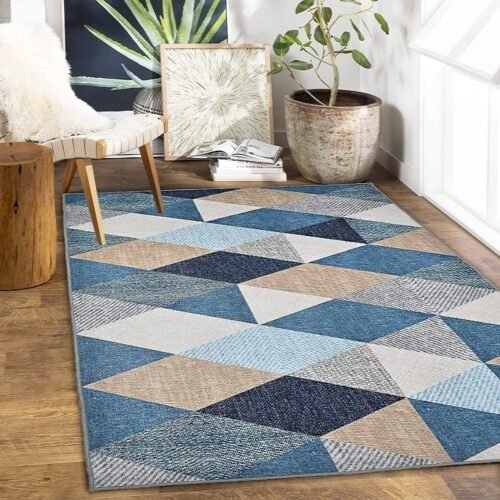
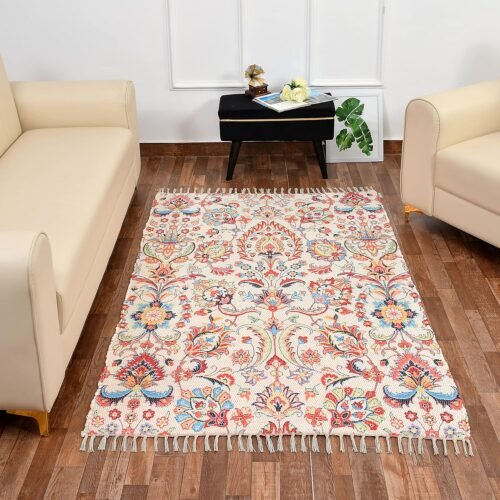
Rugs vs. Runners vs. Mats
A rug typically refers to a larger, room-anchoring piece; a runner is a long, narrow shape suited to hallways or in front of a console; a mat is smaller still, often used at entryways. This area rug buying guide focuses primarily on the room-anchoring rug category, since runners and mats generally follow different sizing logic tied to hallway width rather than furniture arrangement.
Color and Pattern Considerations
Lighter, natural-toned rugs (like undyed jute) tend to make a room feel larger and calmer, echoing the palette advice from our Room-by-Room Home Decor Guide. Darker or patterned rugs hide stains more effectively, which is worth prioritizing in households with pets, children, or high foot traffic where a light-colored rug would show wear quickly.
Maintenance and Durability
Jute rugs generally require spot cleaning rather than full washing and can be sensitive to prolonged moisture. Cotton rugs are typically more washable and forgiving. Before buying, this area rug buying guide recommends checking the specific care instructions against your household’s actual traffic and cleaning habits, rather than assuming all rug materials maintain the same way.
Quick Checklist
- Do at least the front legs of your furniture sit on the rug?
- Have you left 10-15 inches of exposed flooring around the rug’s edges?
- Does the material suit your room’s actual foot traffic level?
- Have you considered a lighter tone for a larger feel, or darker for stain-hiding?
- Do you know the specific cleaning requirements for your chosen material?
Key Takeaways
- A good area rug buying guide starts with sizing, since it’s the most common mistake.
- At minimum, furniture front legs should sit on the rug, not float beside it.
- Jute suits high-traffic areas; shaggy suits softer, lower-traffic spaces.
- Leave a visible flooring border around the rug rather than going wall-to-wall.
Every product mentioned here is personally checked by Shridya — for quality, real reviews, and honest value — before it earns a place on this site.
Conclusion
An area rug buying guide really comes down to getting the size and furniture relationship right before anything else — material and color matter, but a correctly sized rug transforms a room more than any pattern choice. Measure your seating arrangement, choose a material suited to your traffic level, and leave that visible flooring border for a genuinely finished look. For more on tying a full living room together, see our Room-by-Room Home Decor Guide.
FAQs
What size rug should I buy for my living room?
At minimum, the front legs of your sofa and chairs should sit on the rug; for a larger room, having all furniture legs on the rug looks more grounded.
Is jute or shaggy better for a living room rug?
Jute is generally more durable for high-traffic living rooms, while shaggy suits softer, lower-traffic spaces like bedrooms.
How much space should be left around a rug?
Roughly 10-15 inches of exposed flooring between the rug’s edge and the walls keeps it looking intentional rather than wall-to-wall.