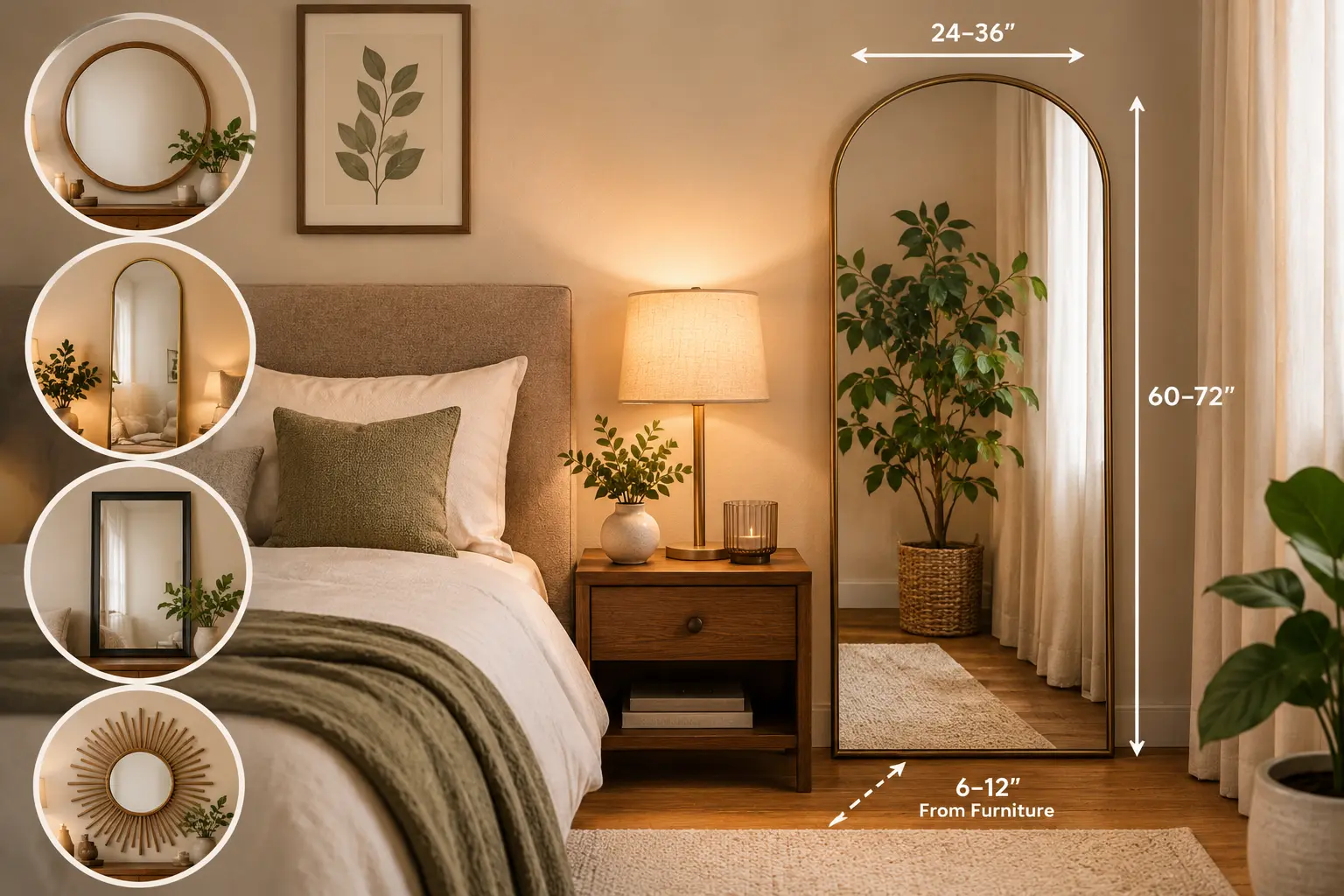

A mirror does more work in a bedroom than almost any other single object — it reflects light, changes how large a room feels, and serves a genuinely practical daily purpose. This bedroom mirror guide covers the actual decisions worth making before you buy one, since “just get a mirror” undersells how much type and placement affect the result.
A well-placed mirror can make a room feel noticeably larger without moving a single piece of furniture. — Shridya Editorial
Table of Contents
Types of Bedroom Mirrors
Every bedroom mirror guide should start with the basic categories, since each serves a different purpose. Full-length mirrors suit outfit-checking and visually elongate a room. Round or oval wall mirrors work well as a decorative focal point, often paired with a dresser or console. Vanity or table mirrors sit on a surface, typically for makeup or grooming, and don’t require wall mounting at all.
A macrame or boho-framed mirror adds texture and warmth in a way a plain frameless mirror can’t, while a clean frameless oval mirror suits a more minimal, editorial bedroom aesthetic — the right choice really depends on the room’s existing style rather than one being universally better.
Sizing a Mirror to Your Wall
As a general rule this bedroom mirror guide relies on, a wall mirror should occupy roughly two-thirds the width of the furniture piece it hangs above — a dresser, console, or headboard. Too small and it looks like an afterthought; too large and it can visually overwhelm the piece it’s meant to complement.
For a small bedroom specifically, a larger mirror often works better than a small one, since scale genuinely affects how much a mirror opens up a room — the “smaller mirror for a smaller room” instinct is usually backwards.
Explore a range of sizes and styles:
Showing 1–4 of 13 results


Placement — Where Mirrors Actually Work Best
Common Mistake: Hanging a mirror directly opposite a bed without thinking it through. Some traditions and personal preferences (including certain Vastu principles common in Indian homes) advise against this specific placement, so it’s worth checking your own comfort with it before committing, separate from the purely visual reasoning in this bedroom mirror guide.
From a purely practical standpoint, the best placement reflects a light source — positioning a mirror to catch window light rather than facing a blank wall makes the biggest visible difference in how bright and open a room feels.
Frame Style and Finish
Frame choice is where a bedroom mirror guide starts to overlap with personal taste rather than hard rules. Gold and antique-finish frames pair well with warmer, earthy palettes — matching the tone we’ve recommended throughout our guides — while frameless or thin-metal mirrors suit a more contemporary, minimal look. A handmade macrame-framed mirror brings texture into a room without needing additional wall art alongside it, which can be a practical way to fill wall space efficiently in a smaller bedroom.
Vanity Mirrors vs. Wall Mirrors
This is the one genuine either/or decision in this bedroom mirror guide. A dedicated vanity or table mirror makes sense if you have surface space (a dresser or dressing table) and want a mirror specifically for daily grooming, separate from a larger decorative wall piece. Some vanity mirrors come with a tray attached, doubling as light storage for jewellery or skincare items — a genuinely practical two-in-one worth considering over a purely decorative option.
Compare a few table and wall options together:

Antique Gold Double-Sided Table Mirror
₹791.00Flower Vanity Table Mirror with Tray
₹199.00Frameless Oval Wall Mirror
₹1,034.00Gold Round Wall Mirror (24 Inches)
₹2,166.00


A Note on Mirror Safety and Mounting
Heavier mirrors, particularly larger wall pieces, need proper wall anchors rather than simple nails, especially on drywall or hollow walls common in many apartments. According to general home safety guidance from established renovation resources, mirrors over a certain weight threshold should always use anchored mounting hardware rated for the specific wall type rather than relying on adhesive strips alone — a detail this bedroom mirror guide won’t skip just because it’s less exciting than styling advice.
Quick Checklist
- Full-length, round wall, or vanity — which type suits your actual daily use?
- Is the mirror sized to roughly two-thirds the width of the furniture below it?
- Does the placement catch natural light rather than facing a blank wall?
- Does the frame finish match your room’s existing palette?
- Is the mounting hardware rated for the mirror’s actual weight and your wall type?
Key Takeaways
- A good bedroom mirror guide starts with type, since full-length, wall, and vanity mirrors serve different purposes.
- Size the mirror to roughly two-thirds the width of the furniture it hangs above.
- Placement near natural light makes a bigger visible difference than most people expect.
- Mounting hardware matters as much as style for heavier wall mirrors.
Every product mentioned here is personally checked by Shridya — for quality, real reviews, and honest value — before it earns a place on this site.
Conclusion
A bedroom mirror guide really comes down to three decisions: the right type for how you’ll actually use it, a size that suits the furniture it accompanies, and placement that makes the most of available light. Get those right, and a mirror becomes one of the more functional, high-impact pieces in the whole room — not just a decorative afterthought. For more on tying wall pieces together generally, see our Wall Art Styling Guide.
FAQs
What size mirror should I get for my bedroom?
As a general rule, a wall mirror should be about two-thirds the width of the furniture it hangs above, such as a dresser or console.
Where should I place a mirror in a bedroom?
Near a window or light source works best, since it reflects natural light and makes the room feel brighter and larger.
Do I need a vanity mirror if I already have a wall mirror?
Not necessarily, but a vanity mirror is useful if you have surface space and want a dedicated spot for daily grooming, separate from a decorative wall piece.