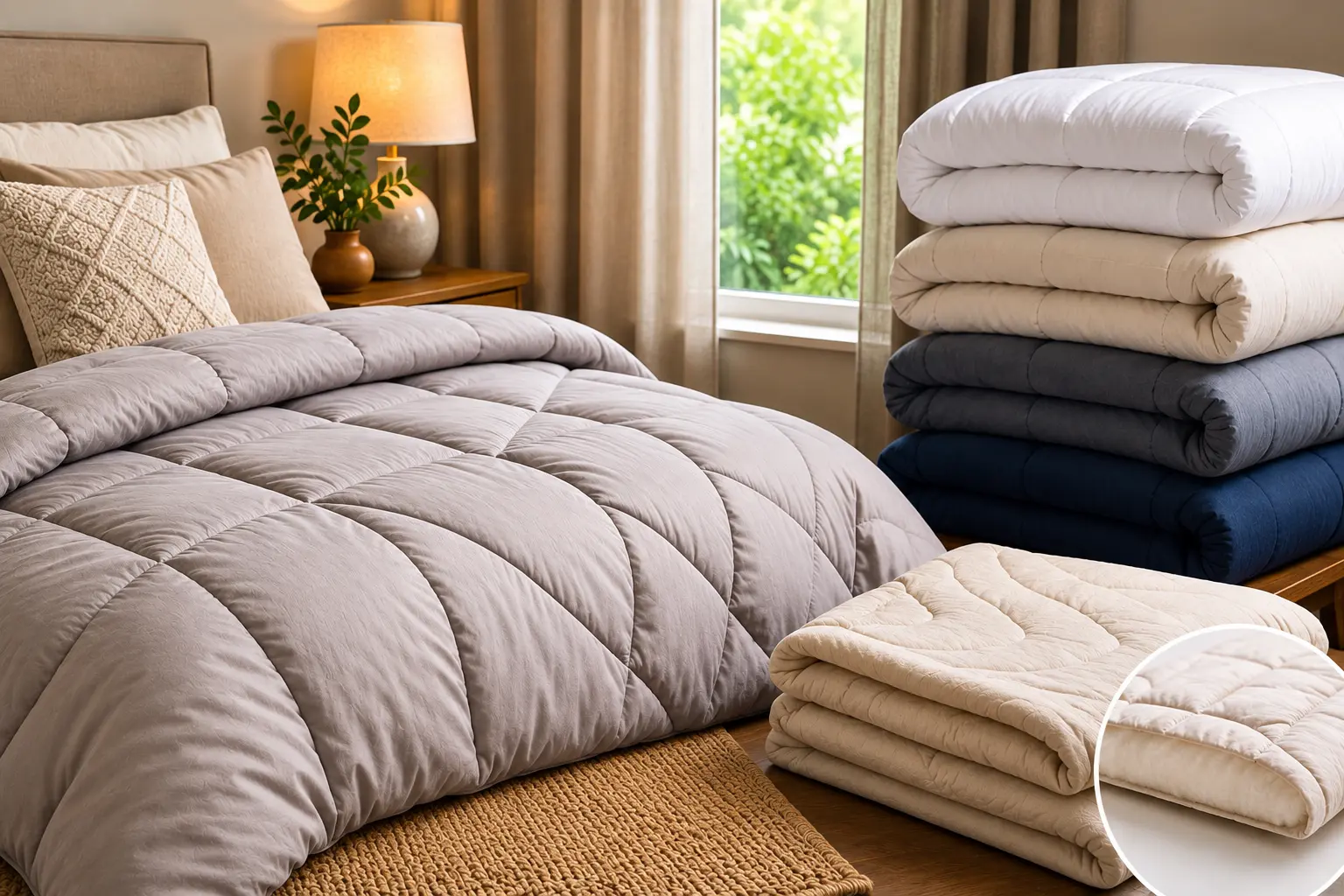

Comforters, quilts, and duvets often get used interchangeably in Indian retail listings, which makes shopping genuinely confusing. This comforter buying guide clears up what actually matters — the GSM number, the fill type, and matching warmth level to your climate — rather than just picking based on the cover pattern.
A comforter’s GSM tells you its warmth, not its quality — a well-made 200 GSM piece can outperform a poorly finished 300 GSM one. — Shridya Editorial
Table of Contents
Comforter, Quilt, or Duvet — What’s the Difference?
In most Indian retail listings, these terms overlap significantly, which is exactly why a clear comforter buying guide matters before you shop. A comforter is typically a stitched, filled piece used directly on the bed. A duvet technically refers to a filled insert used inside a removable cover, though in Indian retail the word is often used interchangeably with comforter. A quilt traditionally refers to a thinner, stitched piece, sometimes layered rather than used alone.
Common Mistake: Assuming all three terms guarantee the same warmth or construction. Always check the actual GSM and fill details in the listing rather than relying on which word is used in the title.
GSM Explained — Matching Warmth to Climate
GSM (grams per square metre) measures the fill’s density, and it’s the single most useful number in this comforter buying guide for matching a comforter to your actual climate. Lower GSM (120-150) suits warmer regions or use alongside air conditioning. Mid-range GSM (200-220) works for most of India’s moderate winters. Higher GSM (300+) suits genuinely cold regions or northern winters.
Browse comforters across GSM and price ranges:
Showing 5–8 of 9 results

Microfiber Reversible Comforter for Double Bed (Subtle Beige & Walnut Brown, 200 GSM)
₹1,378.00Super Soft Glace Cotton King Size AC Comforter Set with Bedsheet & 2-Pillow Covers (4-Piece, Meadow Mist)
₹1,698.00Reversible 220 GSM Microfiber AC Comforter for Single Bed, All Season Lightweight Quilt (Grey & Taupe, 60 × 90 Inch)
₹1,699.00220 GSM Reversible Microfiber AC Comforter for Double Bed, All Season Lightweight Quilt (Burgundy & Grey, 90 × 100 Inch)
₹1,799.00
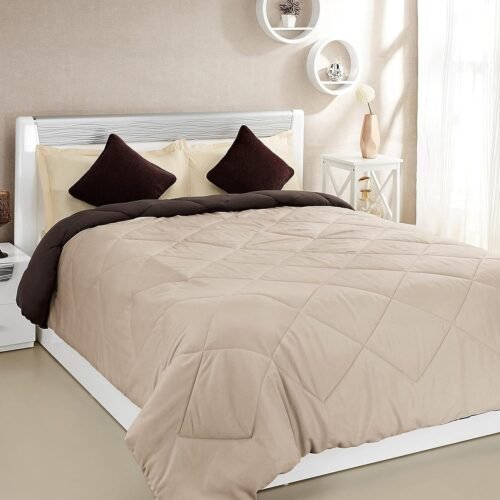

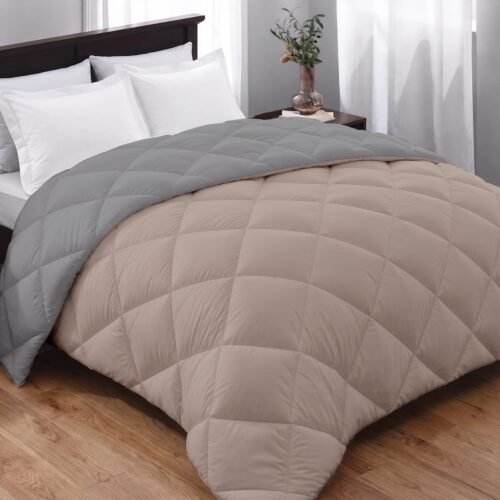
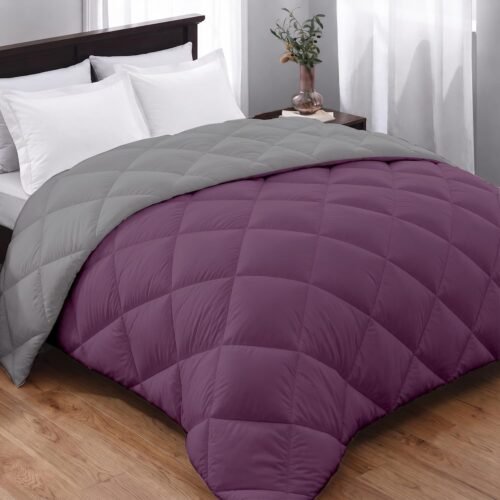
According to general bedding guidance from established home publications, matching fill weight to your actual room temperature and season prevents overheating, which is a more useful buying principle than simply choosing the thickest option available.
Reversible Comforters and Why They’re Practical
Many comforters in this category come reversible, offering two colour or pattern options in one piece — genuinely practical for extending a comforter’s visual life without needing multiple purchases. This comforter buying guide considers reversibility a meaningful value factor, not just a marketing add-on, since it effectively doubles your styling options for the same price.
Fill Type — Microfiber vs. Alternatives
Microfiber is by far the most common fill in Indian retail — affordable, hypoallergenic, and easy to maintain. It doesn’t have the same loft or breathability as natural down, but for most households, the price-to-performance ratio makes it the practical default this comforter buying guide would recommend starting with, particularly for a first purchase.
Compare fill types and constructions side by side:
Showing 5–8 of 9 results
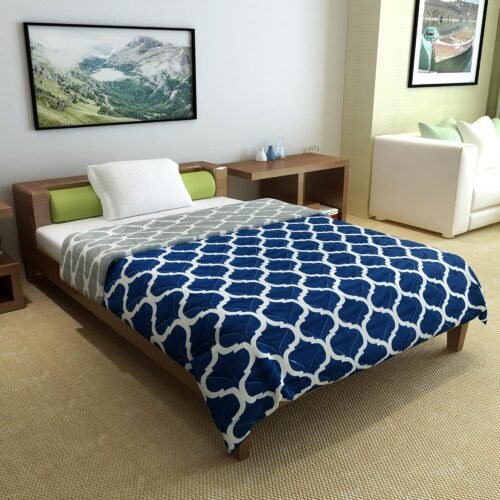
Microfiber 120 GSM Reversible Comforter for Single Bed, All Season Lightweight Quilt (Navy Blue & White, 140 × 230 cm)
₹849.00Microfiber Reversible Comforter for Double Bed (Subtle Beige & Walnut Brown, 200 GSM)
₹1,378.00Reversible 220 GSM Microfiber AC Comforter for Single Bed, All Season Lightweight Quilt (Grey & Taupe, 60 × 90 Inch)
₹1,699.00Super Soft Glace Cotton King Size AC Comforter Set with Bedsheet & 2-Pillow Covers (4-Piece, Meadow Mist)
₹1,698.00
Single vs. Double — Getting the Size Right
As with bedsheets, comforter sizing follows your actual mattress dimensions, not just the bed type label. A single comforter typically suits mattresses up to roughly 90 x 60 inches, while double sizing (commonly around 90 x 100 inches) suits larger beds. Measure your mattress directly, the same principle covered in our Bedsheet Size Guide, rather than assuming based on the bed’s general description.
Caring for a Comforter Long-Term
Most microfiber comforters are machine washable, but check the specific care label before the first wash — some require a larger-capacity machine or professional cleaning due to bulk, particularly higher-GSM pieces. A comforter cover or duvet cover, used alongside the comforter itself, significantly extends its life by reducing how often the main piece needs washing.
Quick Checklist
- Have you checked the actual GSM, not just the product title’s terminology?
- Does the GSM match your region’s actual climate and season?
- Is a reversible option available for more styling flexibility?
- Have you measured your mattress before choosing single or double sizing?
- Do you know the specific wash care requirements before buying?
Key Takeaways
- A proper comforter buying guide checks GSM and fill type, not just the cover pattern.
- Comforter, quilt, and duvet terms overlap in Indian retail — check actual specs.
- Reversible options add real styling value without extra cost.
- Mattress measurements determine sizing more reliably than bed-type labels.
Every product mentioned here is personally checked by Shridya — for quality, real reviews, and honest value — before it earns a place on this site.
Conclusion
A good comforter buying guide comes down to matching GSM to your actual climate and checking fill type before you buy, rather than choosing based on the cover design alone. Measure your mattress, pick a sensible GSM range for your season, and consider a reversible option for added flexibility. For more on bedroom textiles generally, see our Bedsheet Buying Guide.
FAQs
What does GSM mean for a comforter?
GSM (grams per square metre) measures fill density, which determines warmth — higher GSM means a warmer, heavier comforter.
Are comforters, quilts, and duvets the same thing?
Not technically, but Indian retail listings often use the terms interchangeably. Always check the actual GSM and fill details rather than the title alone.
Is microfiber a good comforter fill?
Yes, for most households — it’s affordable, hypoallergenic, and easy to maintain, even if it doesn’t match natural down’s loft.