
A dinnerware set is one of the few kitchen purchases you’ll use every single day for years, which makes material and durability far more important than the pattern printed on it. This dinnerware buying guide covers what actually holds up to daily use, so your set doesn’t chip, crack, or need replacing within a year.
A dinner set that looks beautiful in the box but chips within months isn’t actually good value, no matter how low the price was. — Shridya Editorial
Table of Contents
Opal Glass vs. Stainless Steel vs. Eco-Friendly
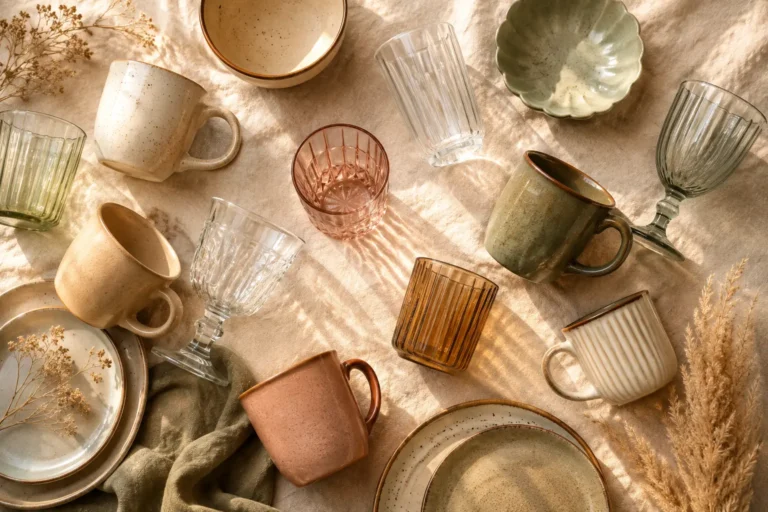
Every dinnerware buying guide should start with material, since it’s the single biggest factor in how long a set actually lasts. Opal glass (also called opalware) offers a premium, ceramic-like look at a lower breakage risk than regular glass, and it’s microwave and dishwasher safe. Stainless steel is essentially unbreakable and suits households wanting maximum durability over aesthetics. Eco-friendly options like rice husk biocomposite or wheat straw fibre are lightweight, genuinely unbreakable, and appeal to households prioritizing sustainability over a traditional dinnerware look.
Browse the full range:
Showing 5–7 of 7 results

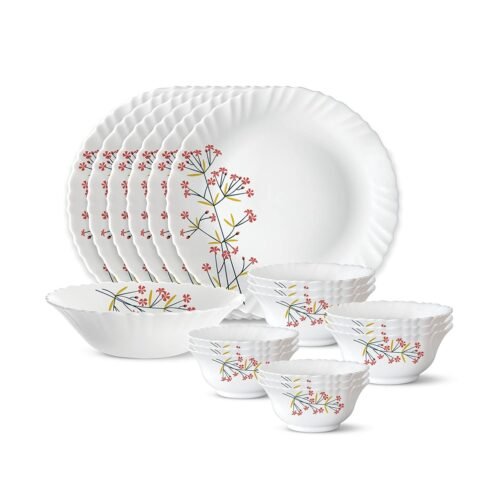
Silk Series Opalware Dinner Set (19 Pieces) | Bone Ash-Free | Microwave & Dishwasher Safe | Dinnerware Set for Family of 6 | Red Bud
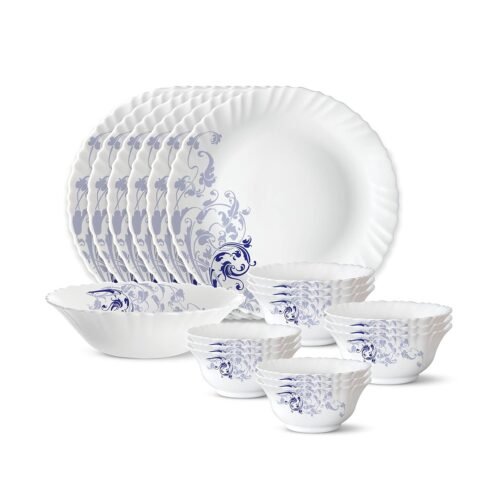
₹1,209.00Silk Series Opalware Dinner Set (19 Pieces) | Bone Ash-Free | Microwave & Dishwasher Safe | Dinnerware Set for Family of 6 | Blue Eye
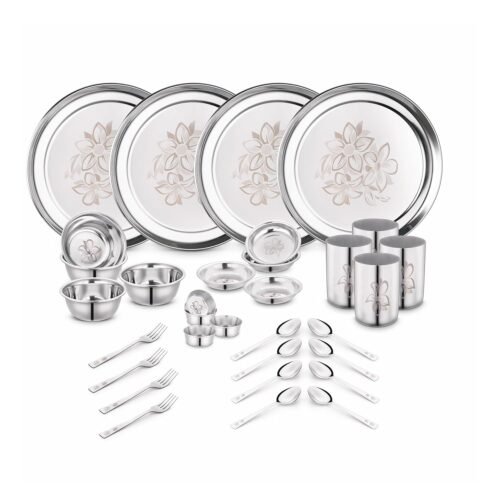
₹1,216.00Stainless Steel Dinner Set (32 Pieces) | Heavy Gauge 202 SS | Dinnerware Set for 4 People | Silver
₹1,399.00
Why Opal Glass Chips Less Than You’d Expect
Common Mistake: Assuming glass dinnerware is inherently fragile. Opal glass is tempered and treated specifically to resist chipping and cracking under normal daily use. According to general material science resources, tempered glass undergoes a controlled heating and cooling process that increases its strength significantly compared to standard annealed glass, which is the actual reason opalware holds up better day-to-day than older ceramic or porcelain options. This dinnerware buying guide would still recommend some care around sudden temperature changes, but day-to-day durability is genuinely strong.
Sizing a Set to Your Household
Most dinnerware sets are labelled by the household size they suit — commonly “for 4” or “for 6” people, with total piece counts (18, 19, or 32 pieces) reflecting plates, bowls, and serving pieces bundled together. This dinnerware buying guide recommends sizing slightly above your actual household count, since guests and breakage both reduce a set faster than expected. Similar to the sizing principle in our Drinkware Buying Guide, a few spares prevent an awkward mismatched set later.
Compare set sizes side by side:
Showing 5–7 of 7 results
Stainless Steel Dinner Set (32 Pieces) | Heavy Gauge 202 SS | Dinnerware Set for 4 People | Silver
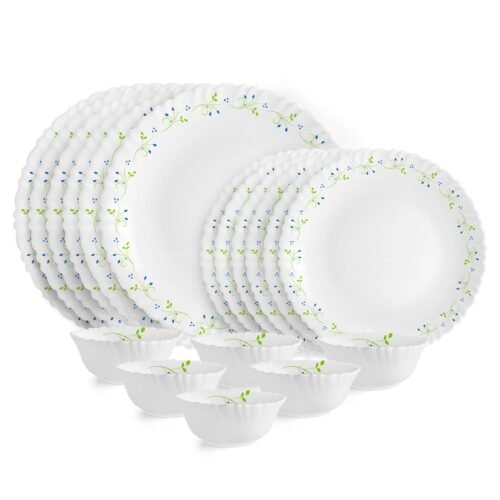
₹1,399.00Tropical Lagoon Dazzle Opal Glass Dinner Set (18 Pieces) | Microwave & Dishwasher Safe | Bone Ash Free | Lead Free | White
₹1,154.00Wheat Straw Serving Bowl Set (Pack of 4, 800 ml) | Eco-Friendly Bamboo Fiber Bowls | Microwave & Dishwasher Safe | Unbreakable
₹474.00
Mixing Sets vs. Buying One Complete Collection
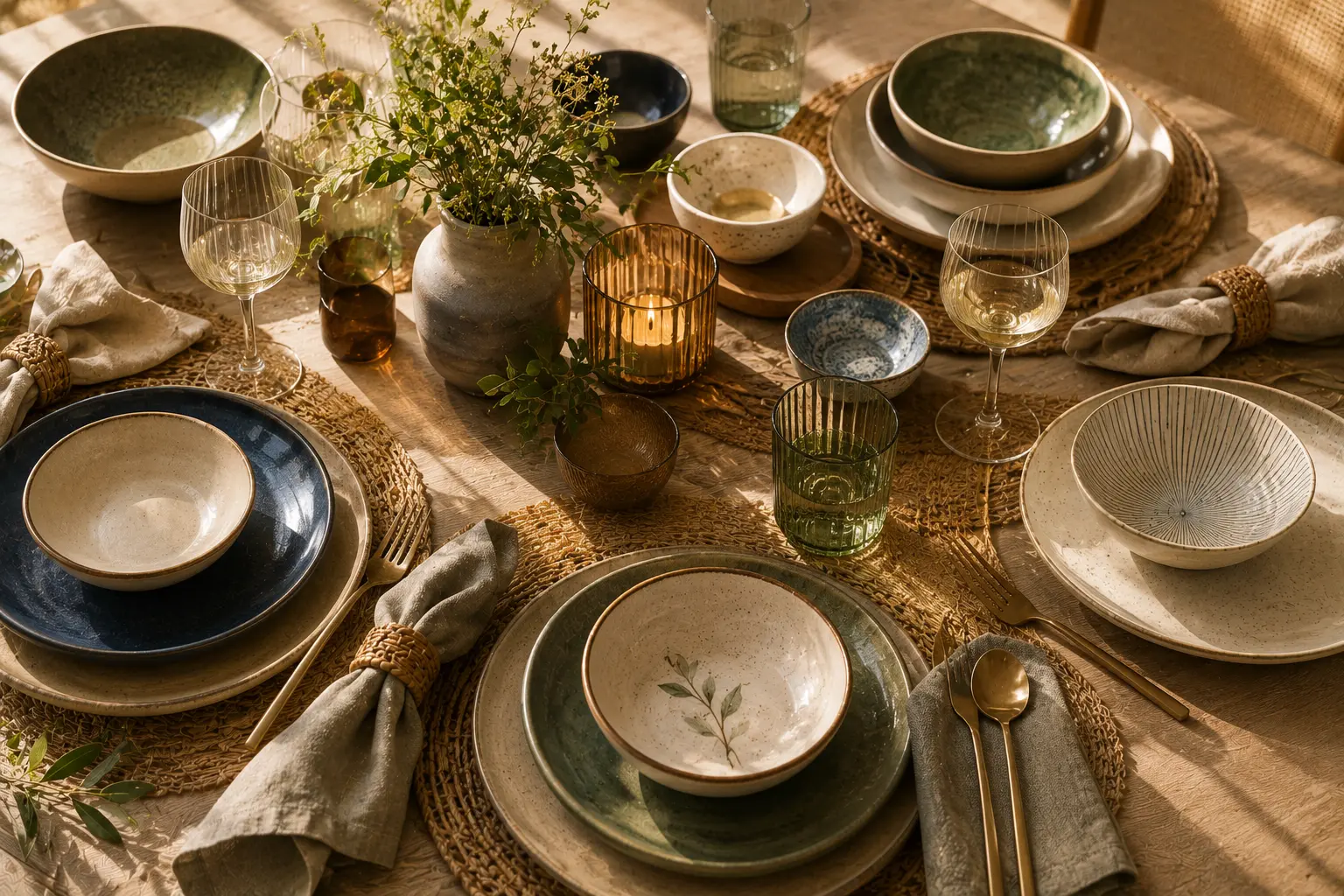
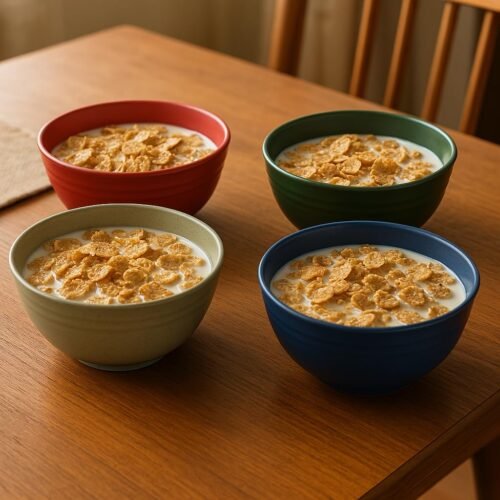
A complete matched set gives a cohesive, put-together look for everyday use and entertaining. Mixing pieces — a stainless steel base set with a few decorative opalware serving pieces layered in — offers more visual variety, echoing the texture-mixing principle from our Cushion Cover Buying Guide. Neither approach is wrong; it depends on whether you want dinnerware to recede into the background or add its own visual interest.
Everyday Bowls and Serving Pieces
Beyond the core plates, dedicated serving bowls (like eco-friendly biocomposite or wheat straw options) are worth having separately from your main dinner set, since they’re used more frequently and independently — for a quick meal, a snack, or serving sides at a larger dinner. This dinnerware buying guide treats these as a genuinely useful supplementary purchase, not a replacement for a full set.
Care and Microwave Safety
Opal glass and most stainless steel dinnerware are microwave and dishwasher safe, but always verify this per product rather than assuming — some decorative pieces, especially those with metallic trim, are not microwave safe and can damage in the appliance. Checking this detail before your first use avoids a genuinely common and avoidable mistake.
Quick Checklist
- Have you chosen a material based on durability needs, not just appearance?
- Is your set sized slightly above your actual household count?
- Are you buying one matched collection, or intentionally mixing pieces?
- Do you have dedicated everyday serving bowls separate from your main set?
- Have you confirmed microwave and dishwasher safety per piece, not assumed it?
Key Takeaways
- A good dinnerware buying guide starts with material, since it determines actual longevity.
- Opal glass resists chipping better than most people expect from a glass product.
- Size your set slightly above household count to account for guests and breakage.
- Mixing matched and standalone pieces adds flexibility without sacrificing cohesion.
Every product mentioned here is personally checked by Shridya — for quality, real reviews, and honest value — before it earns a place on this site.
Conclusion
A proper dinnerware buying guide comes down to choosing material for how you’ll actually use it daily, not just how it looks in photos. Opal glass offers the best balance of look and durability for most households, while stainless steel and eco-friendly options suit specific priorities around toughness or sustainability. For more on building out your kitchen thoughtfully, see our Drinkware Buying Guide.
FAQs
Is opal glass dinnerware durable?
Yes — opal glass is tempered and treated to resist chipping and cracking under normal daily use, making it more durable than many people expect from glass.
How do I choose the right dinnerware set size?
Size your set slightly above your actual household count, since guests and occasional breakage reduce a set faster than expected.
Is stainless steel dinnerware better than glass?
It depends on priorities — stainless steel is essentially unbreakable, while opal glass offers a more premium look with strong day-to-day durability.