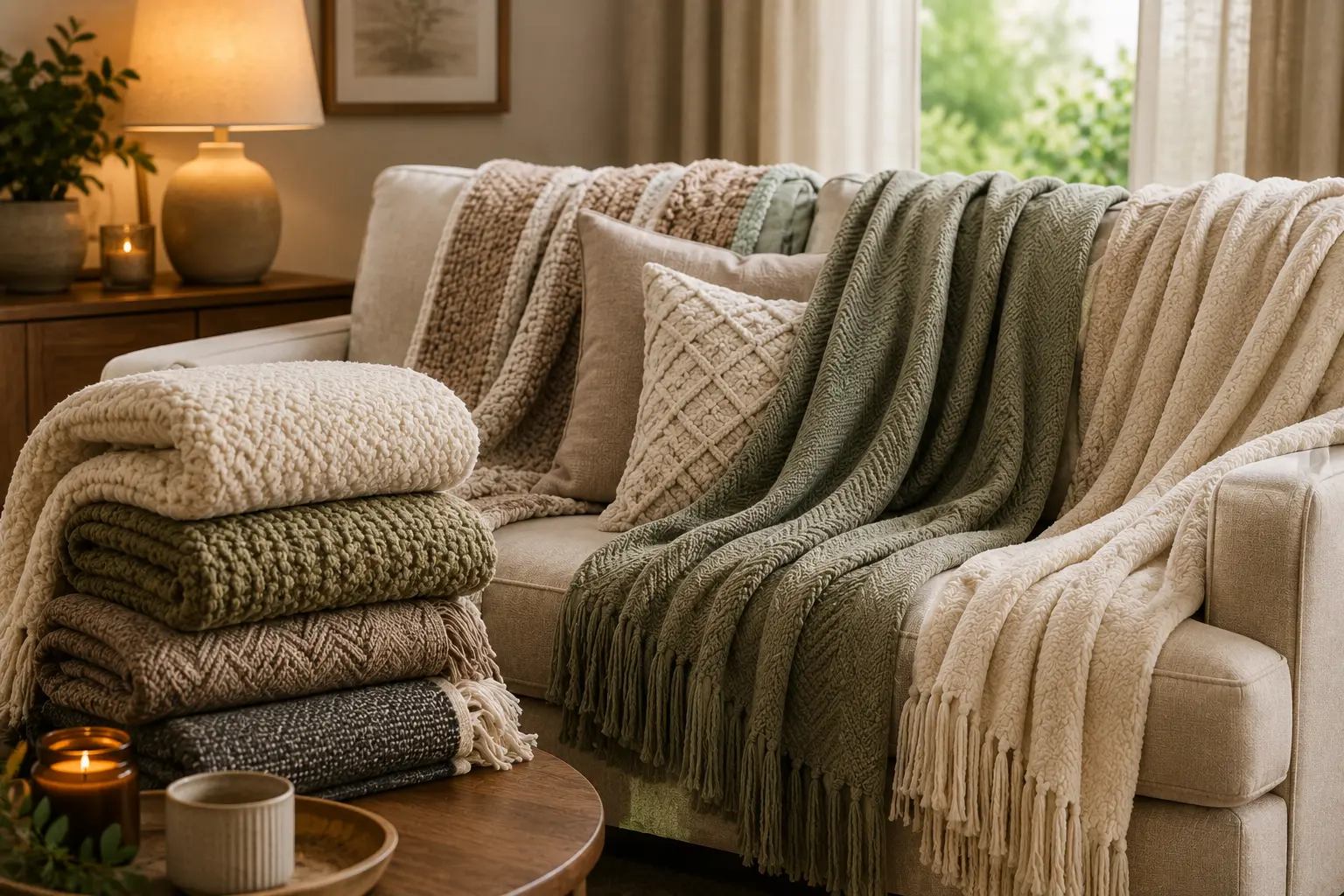

A throw blanket is one of the cheapest ways to add warmth and texture to a living room, yet most end up folded neatly and never actually used. This throw blanket buying guide focuses on choosing one you’ll genuinely reach for, not just one that photographs well on a sofa arm.
A throw blanket that never leaves the sofa arm isn’t decor, it’s just fabric. The best ones get used, then draped back casually, not arranged perfectly. — Shridya Editorial
Table of Contents
Fabric Types and What They Actually Feel Like
A good throw blanket buying guide starts with fabric, since it determines both feel and function. Cotton chevron or waffle-weave throws are lightweight, breathable, and suit year-round use, including warmer months. Sherpa fleece throws are noticeably heavier and warmer, better suited to genuinely cold evenings or air-conditioned rooms. Muslin throws are the lightest option, closer to a decorative layer than a functional blanket.
Showing 13–14 of 14 results
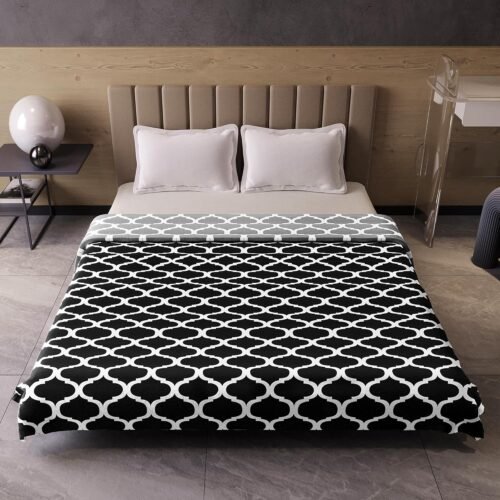
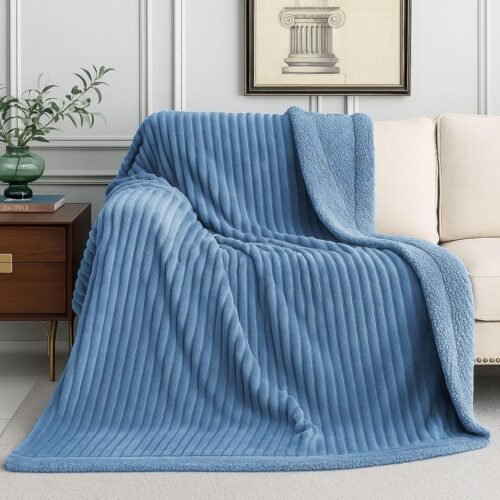
Weight — Decorative vs. Genuinely Warm
Common Mistake: Buying a throw purely for how it looks folded on a sofa, then finding it’s too thin to actually use on a cold evening. If you want a throw blanket buying guide’s honest advice: decide upfront whether you want something primarily decorative or something you’ll actually wrap yourself in, since the ideal fabric weight differs meaningfully between the two use cases.
According to general textile guidance from established home publications, heavier weave and denser fill directly correlate with warmth retention, which is a more reliable indicator than a product photo alone.
Size Guide for Sofas and Beds
Standard throw sizes typically run around 50×60 inches, suited to draping over a single sofa arm or the foot of a bed without overwhelming the space. Larger options (60×80 inches or beyond) work better if you intend to actually use it for warmth while seated, rather than purely as a styling accent. This throw blanket buying guide recommends sizing up if functional use matters more to you than the folded, decorative look.
Showing 13–14 of 14 results
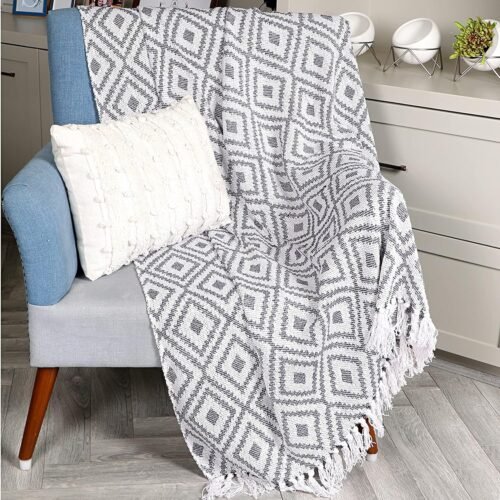
How to Drape a Throw Properly
The most common styling approach is a loose diagonal fold over one sofa arm, letting it cascade naturally rather than sitting in a perfectly stacked square. For the foot of a bed, a horizontal fold across the width works well, echoing the styling covered in our Room-by-Room Home Decor Guide. Avoid folding too precisely — a slightly relaxed drape reads as more natural and lived-in than a stiff, hotel-corner fold.
Choosing Pattern vs. Texture
If your sofa or cushions already carry a pattern, a solid or subtly textured throw generally works better than adding another print into the mix — this throw blanket buying guide treats the throw as a texture layer more often than a pattern statement, letting cushions carry most of the visual interest instead.
Care and Washing
Most cotton and sherpa throws are machine washable on a gentle cycle, though checking the specific care label matters more for sherpa fleece, which can mat or lose loft if washed too aggressively. Regular washing matters more for throws than most people assume, since they’re handled directly and often used while lounging, unlike purely decorative cushions.
Quick Checklist
- Have you decided if this throw is primarily decorative or genuinely functional?
- Does the fabric weight match your actual climate and AC use?
- Is the size right for how you intend to use it — sofa accent or full-body warmth?
- Does the texture complement your existing cushions rather than compete with them?
- Have you checked the wash care instructions before buying?
Key Takeaways
- A good throw blanket buying guide starts by deciding decorative versus functional use.
- Fabric weight (cotton, sherpa, muslin) determines actual warmth, not just look.
- Standard 50×60 inch sizing works for accent use; go larger for genuine warmth.
- A relaxed, loose drape looks more natural than a perfectly stacked fold.
Every product mentioned here is personally checked by Shridya — for quality, real reviews, and honest value — before it earns a place on this site.
Conclusion
A throw blanket buying guide really comes down to being honest about how you’ll use it — purely decorative pieces can prioritize look and texture, while genuinely functional ones need the right weight and size to actually get reached for on a cold evening. Either way, a throw is one of the easiest, lowest-cost ways to add warmth to a living room. For more layering ideas, see our Room-by-Room Home Decor Guide.
FAQs
What’s the best fabric for a throw blanket?
It depends on use — cotton or waffle-weave suits year-round, lightweight use, while sherpa fleece offers genuine warmth for colder evenings.
What size throw blanket should I buy?
Standard 50×60 inches works for sofa or bed-foot styling, while larger sizes (60×80 inches or more) suit actual functional use for warmth.
How do I drape a throw blanket properly?
A loose diagonal fold over one sofa arm looks more natural than a perfectly stacked square — avoid folding too precisely.