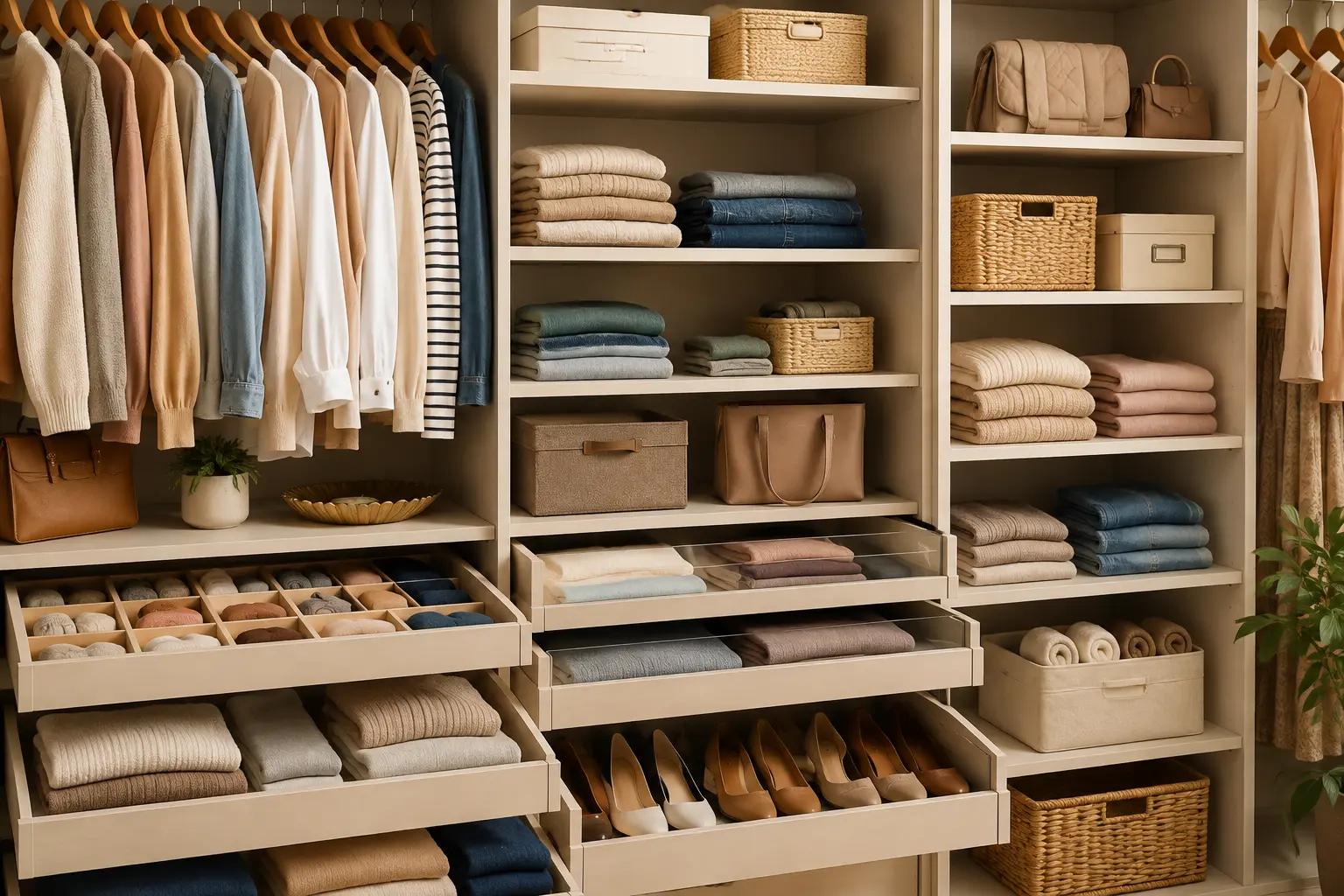

Most cluttered wardrobes don’t actually lack space — they lack a system. This wardrobe organization guide is built around that exact idea: before you consider a bigger wardrobe or a home renovation, a handful of drawer organizers and a better folding method usually solves the real problem.
A wardrobe rarely needs more space. It needs fewer things stacked loosely and more things sorted into a system. — Shridya Editorial
Table of Contents
Start With a Real Sort, Not a Reshuffle
Every wardrobe organization guide should start here, and it’s the step most people skip: take everything out, and only put back what you’ve actually worn in the past year. This isn’t about minimalism for its own sake — it’s that no organizer, however well designed, can fix a wardrobe that’s storing more than it should. A genuine sort, done once, makes every step after it more effective.
Common Mistake: Buying organizers before decluttering. It feels productive, but organizing too much stuff just makes a bigger, better-labelled mess instead of a smaller, genuinely usable one.
Drawer Organizers — The Highest-Impact Fix
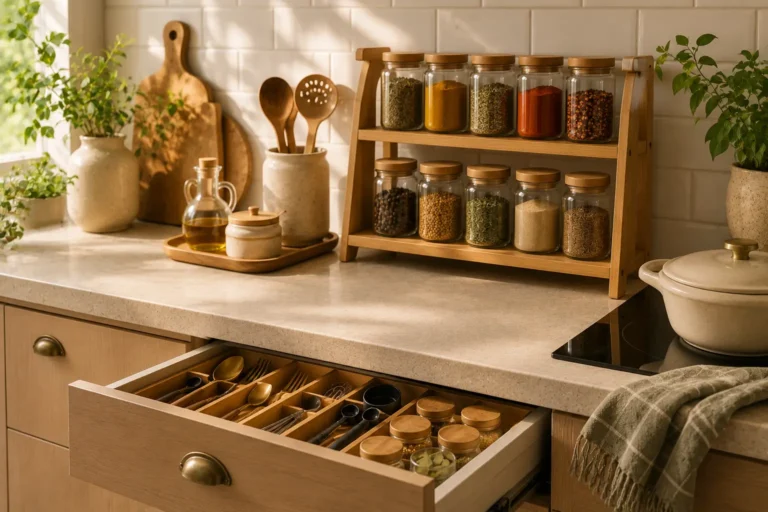
This is where a wardrobe organization guide earns its keep. Compartmentalized drawer organizers — for socks, innerwear, ties, or accessories — stop small items from becoming a loose pile every time a drawer opens. A well-reviewed option with 24 individual compartments works especially well for households with several people sharing storage.
A range worth browsing:
According to general organizing guidance from established home publications, drawer dividers and compartmentalized storage are consistently cited as one of the highest-impact, lowest-cost organizing changes a household can make — not just a marketing claim specific to any one brand.
Saree and Delicate Garment Storage
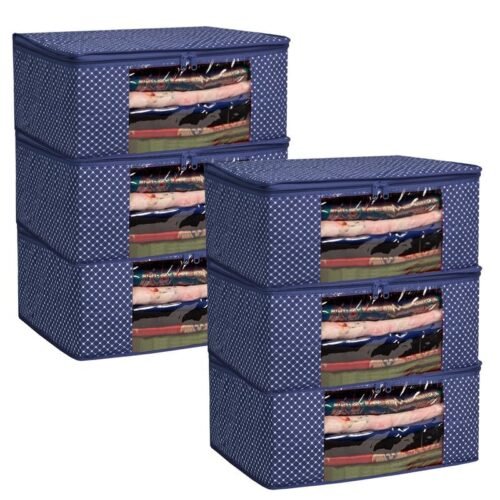
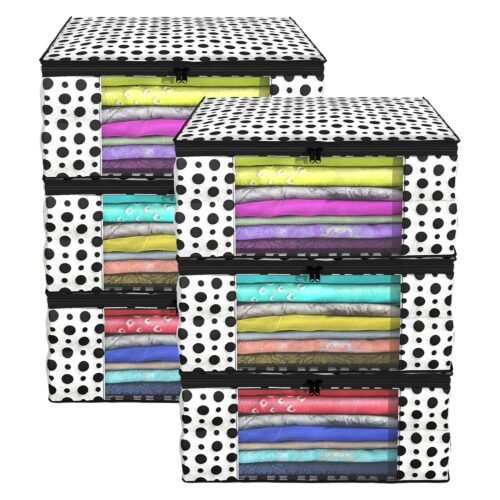
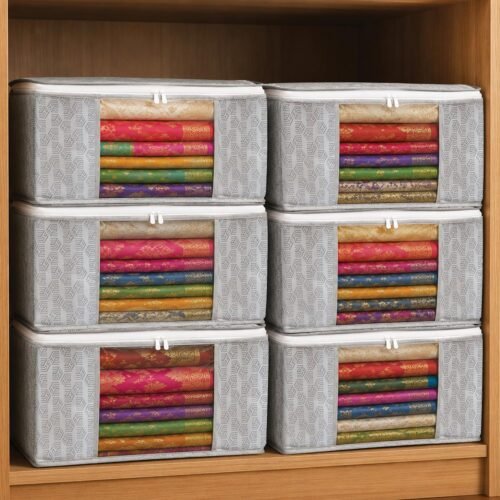
For households storing sarees or other delicate, foldable garments, dedicated storage bags with a transparent window and zip closure genuinely change how manageable a wardrobe feels — you can identify a specific piece without unfolding and refolding several others first. This wardrobe organization guide treats this as a distinct category from general clothes storage, since sarees fold and store differently from everyday garments.
Explore saree and garment storage options:
Showing 5–8 of 8 results

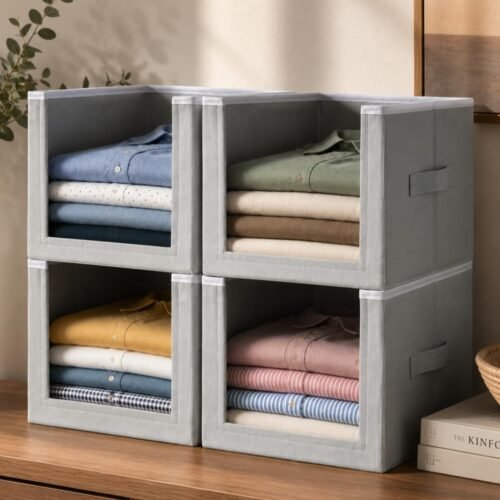
Set of 4 Non-Woven Clothes Stackers | Foldable Wardrobe Shelf Organizers with Handles | Grey
₹628.00Set of 6 Cotton Quilted Saree Covers | 3-Layer Foldable Wardrobe Storage Bags with Transparent Window & Zip | Navy Blue
₹595.00Set of 6 Non-Woven Saree Covers | Polka Dot Wardrobe Storage Bags with Transparent Window & Zip | Black & White
₹299.00Set of 6 Non-Woven Saree Covers | Wardrobe Organizer with Transparent Window | Zip Closure | Grey | 45 × 33 × 22 cm
₹348.00
Folding Systems That Actually Save Space
Vertical folding — storing folded items standing upright rather than stacked flat — is one of the more genuinely useful habits any wardrobe organization guide can recommend, since it means you can see every item at a glance instead of digging through a stack to find what’s at the bottom. This pairs particularly well with foldable stacker organizers that hold vertically-folded items upright and separated.
Shelf and Stacker Organizers
Foldable clothes stackers and storage boxes work well for shelf-based wardrobes without built-in drawers, turning open shelf space into defined, labelled sections rather than one loose pile per shelf. A set of four large foldable boxes with a steel frame and carry handles is particularly useful for bulkier items like sweaters or blankets that don’t suit drawer storage.
Seasonal Rotation
A wardrobe organization guide isn’t just about the system, it’s about maintaining it — rotating off-season clothing into storage boxes (and moving them under the bed, as covered in our Small Space Storage guide) keeps your active wardrobe genuinely usable year-round, instead of permanently crowded with clothes you won’t touch for months.
Quick Checklist
- Have you actually removed everything and sorted before organizing?
- Are small items (socks, accessories) contained in a compartmentalized drawer organizer?
- Do delicate garments like sarees have dedicated, breathable storage?
- Are you folding vertically where possible, rather than stacking flat?
- Is off-season clothing rotated out, not permanently taking up active space?
Key Takeaways
- A good wardrobe organization guide starts with sorting, not buying organizers first.
- Drawer organizers are the single highest-impact, lowest-cost fix for daily clutter.
- Vertical folding makes items visible and accessible, unlike flat stacking.
- Seasonal rotation keeps an organized wardrobe from slowly becoming crowded again.
Every product mentioned here is personally checked by Shridya — for quality, real reviews, and honest value — before it earns a place on this site.
Conclusion
A proper wardrobe organization guide isn’t really about products — it’s about a system that a handful of organizers happen to support. Sort first, contain small items, fold vertically where you can, and rotate seasonally, and a wardrobe stays genuinely usable instead of sliding back into clutter within a few weeks. For more small-space storage principles that apply beyond just the wardrobe, see our Small Space Storage guide.
FAQs
What’s the first step in organizing a wardrobe?
Remove everything and sort it, keeping only what you’ve actually worn in the past year, before buying any organizers.
Are drawer organizers worth it?
Yes — compartmentalized drawer organizers are consistently one of the highest-impact, lowest-cost ways to keep small items from becoming clutter.
How should sarees be stored?
In dedicated storage bags with a transparent window and zip closure, which protect the fabric and make individual pieces easy to identify without unfolding others.